The Pulse of Wildlife and the Healing Power of the Gorge. An Inspiring Journey Through Asahikawa, Sounkyo Gorge, and Kamikawa
Contents
01
Overview
Located at the foot of the Daisetsuzan Mountain Range, the Asahikawa-Sounkyo-Kamikawa Area is a major hub for exploring northern Hokkaido, which seamlessly blends urban energy with vast natural landscapes. Asahikawa is best known for Asahiyama Zoo, where visitors are able to see animals in natural settings. The region is also one of Japan's five major furniture-producing areas and home to Asahikawa Furniture, shaped by generations of craftsmanship rooted in rich forests. Along with its distinctive food culture, the area offers an abundance of cultural attractions nurtured by the land itself.
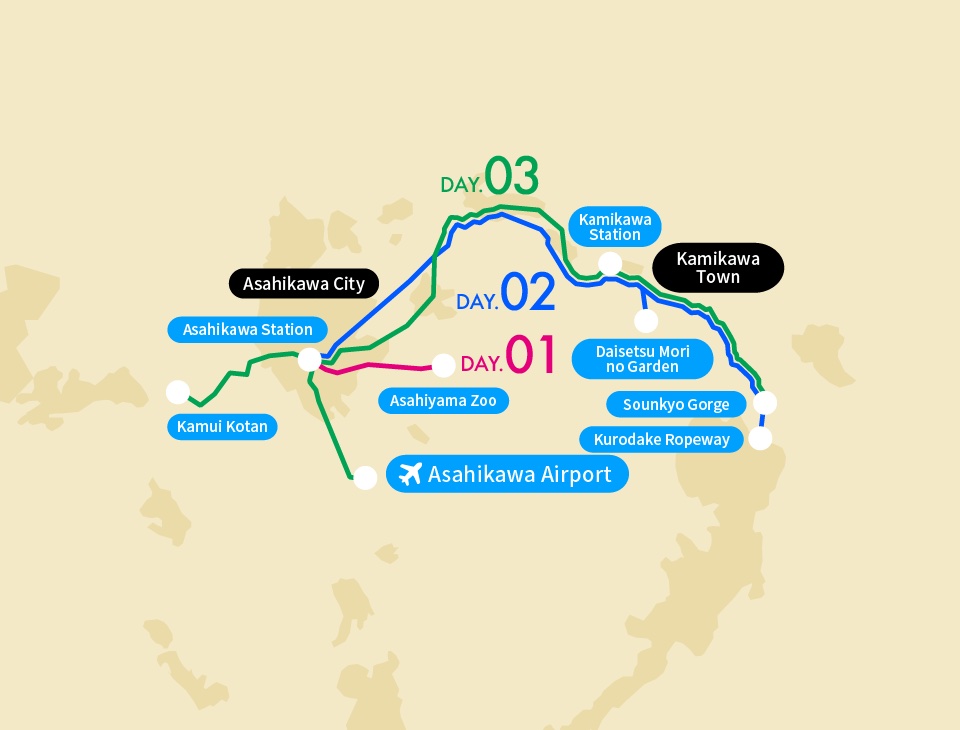
Follow the Ishikari River up north to Kamikawa Town and the scenery changes dynamically. It is home to Sounkyo Gorge, the gateway to Daisetsuzan National Park, which is famous for its 24-kilometer-long gorge of sheer cliffs. Visitors can also enjoy the Daisetsu Mori no Garden, which reveals a different face with each season, and Sounkyo Onsen, known for its breathtaking canyon views, both offering a deep relaxation for the body and mind. The area around Kamikawa Station has been revitalized through the renovation of old buildings, transforming it into a district where refined design meets local passion, thus becoming a new and emerging travel destination. This three-day, two-night model itinerary introduces both the energy and tranquility the area withholds. Using Dohoku Bus and other public transportation, this journey invites visitors to feel the heartbeat of Japan's northern lands, through the ever-changing scenery seen from the windows to the destinations themselves.
Follow the Ishikari River up north to Kamikawa Town and the scenery changes dynamically. It is home to Sounkyo Gorge, the gateway to Daisetsuzan National Park, which is famous for its 24-kilometer-long gorge of sheer cliffs. Visitors can also enjoy the Daisetsu Mori no Garden, which reveals a different face with each season, and Sounkyo Onsen, known for its breathtaking canyon views, both offering a deep relaxation for the body and mind. The area around Kamikawa Station has been revitalized through the renovation of old buildings, transforming it into a district where refined design meets local passion, thus becoming a new and emerging travel destination. This three-day, two-night model itinerary introduces both the energy and tranquility the area withholds. Using Dohoku Bus and other public transportation, this journey invites visitors to feel the heartbeat of Japan's northern lands, through the ever-changing scenery seen from the windows to the destinations themselves.
02
[Day 1] Arrive at Asahikawa Station / Asahiyama Zoo [Stay in Asahikawa City]
1. Asahikawa Station / Asahikawa Kitasaito Garden
A 40-minute bus ride from Asahikawa Airport, the journey starts from Asahikawa Station. The building was renovated in 2011, designed by renown architect Hiroshi Naito. Its concept is "a station with a river", and it is not just a place used for transportation. The whole station, including the walls, ceilings, and handrails, are built using thousands of local Ash wood which fills the air with the scent of wood and makes you feel like you've wandered into a forest. The lingering scent after you've left the station and the warmth of the wood that comes from the walls and handrails will surely refresh you from your travel fatigue.
Step out of the station from the South Exit and you will be greeted by the Asahikawa Kitasaito Garden, where you can see the Chubetsu River and the Daisetsuzan Mountain Range. There is no other city like Asahikawa where such nature awaits you right outside the station. The garden, which is right by a river and acts as the local's oasis, is home to flowers of each season. During the summer, the warm wind gently blows lavender and echinaceas, while in the winter the ground is covered by snow, turning it into a winter wonderland. Take a 15-minute stroll accompanied by the soothing sound of the river; the crisp and fresh air of Hokkaido will surely refresh your body and mind.
Step out of the station from the South Exit and you will be greeted by the Asahikawa Kitasaito Garden, where you can see the Chubetsu River and the Daisetsuzan Mountain Range. There is no other city like Asahikawa where such nature awaits you right outside the station. The garden, which is right by a river and acts as the local's oasis, is home to flowers of each season. During the summer, the warm wind gently blows lavender and echinaceas, while in the winter the ground is covered by snow, turning it into a winter wonderland. Take a 15-minute stroll accompanied by the soothing sound of the river; the crisp and fresh air of Hokkaido will surely refresh your body and mind.
2. Lunch Near Asahikawa Station
When the crisp air of the north works up your appetite, it's time to enjoy local dishes of Asahiyama. Here are a few places near Asahikawa Station that are rich in history and flavor.
1. Asahikawa Ramen Aoba-honen
Established in 1947, Asahikawa Ramen Aoba is said to be where Asahikawa ramen started. Their broth is special in that they use a mix: a blend of tonkotsu and chicken broths combined with a seafood-based broth made from dried sardines and konbu. The lard on the top keeps the ramen hot, which makes it delicious down to the last drop.
2. Jun Dog no Pigeon-kan
If you'd like to have a quick snack, look no further than local favorite Jun Dog. It's a stick-shaped rice ball filled with fried shrimp or chicken cutlet, a portable treat that can be enjoyed in the garden.
3. Cafe Tirol
After lunch, stop by this coffee shop established in 1939, which appeared in a famous Japanese novel called Freezing Point by Ayako Miura. Visitors can enjoy their dark roast coffee alongside the classic interior and red brick walls which adds depth to the start of your journey.
3. Asahiyama Zoo
A 40-minute( bus ride from Asahikawa Station)Asahiyama Zoo is often praised as one of the best zoos in Japan, famous for pioneering its unique “behavior-based exhibits.” Rather than simply displaying animals’ appearances, the zoo showcases their natural abilities and behaviors, allowing visitors to see the animals as they truly are. More than just a place to observe, it's a hugely popular place where you can feel the vibrant energy of life itself.
1. Seal House Cylindrical Tank
At the center of the building stands "Marine Way", a cylindrical tank measuring 1.5 meters in diameter. When gazing into the tank, a white shape suddenly darts across your eyes; it’s a spotted seal! Naturally curious, the seals move up and down through the tank, sometimes stopping abruptly to peer at visitors through the glass. Gliding through the water as if flying, they appear far more graceful and dynamic than one could ever imagine from their relaxed appearance on land.
2. Polar Bear House
From a capsule known as the “Seal’s Eye,” visitors can peer directly into the polar bears’ living environment. If you’re lucky enough to catch the zoo’s famous “Mogumogu Time,” where keepers feed the animals while explaining their unique behaviors, you’ll witness a truly jaw-dropping scene. A massive polar bear launches its powerful body toward their food, diving in with a thunderous splash. The overwhelming strength of this white giant unfolds right before your eyes. Separated by just a single pane of glass, the intensity and presence you feel is an experience unlike any other.
3. Penguin House
Step into the 360-degree underwater tunnel, and penguins race overhead as if they are birds soaring through a blue sky. Watching the penguins fly through the water will surely amaze visitors, as it is something hard to imagine from their familiar waddling walk on land.
Visitors will see handwritten explanation boards here and there when walking inside the zoo. These are all created by the keepers themselves. They explain not just the animal's natural behavior, but everyday episodes that offer a peek inside the animal's lives, along with messages about environmental issues. They go beyond simple cuteness, conveying the harsh realities of life in the wild and the preciousness of every living being. This deep perspective is what makes Asahiyama Zoo truly special.
After walking through the grounds with many slopes, take a break at one of the zoo’s cafés. Refresh yourself with tomato juice from Taniguchi Farm, or soft-serve ice cream made with locally produced milk. As Asahiyama Zoo is very popular, the buses can get quite crowded. For a more relaxed journey, round-trip travel by taxi is recommended.
After walking through the grounds with many slopes, take a break at one of the zoo’s cafés. Refresh yourself with tomato juice from Taniguchi Farm, or soft-serve ice cream made with locally produced milk. As Asahiyama Zoo is very popular, the buses can get quite crowded. For a more relaxed journey, round-trip travel by taxi is recommended.
*Important Notes
As the zoo is built along a mountainside, there are many uphill paths throughout the grounds. We recommend wearing comfortable walking shoes or sneakers, staying well hydrated, and bringing a parasol or sun protection on hot days. Please note that even during the summer season, some animals begin returning to their indoor enclosures after 5:00 p.m., and certain exhibits may no longer be viewable. Flash photography and live streaming within the zoo are prohibited, regardless of whether the content is monetized or not. Summer Season: April 29 - October 15 9:30 a.m. - 5:15 p.m. Last admission 4:00 p.m. Late Summer: October 16 - November 3 9:30 a.m. - 4:30 p.m. Last admission 4:00 p.m. Winter Season: November 11 - April 7 10:30 a.m. - 3:30 p.m. Last admission 3:00 p.m. Late Winter: January 2 - April 7 10:30 a.m. - 3:30 p.m. Last admission 3:00 p.m. Closed: April 8 - 28, November 4 - 10
As the zoo is built along a mountainside, there are many uphill paths throughout the grounds. We recommend wearing comfortable walking shoes or sneakers, staying well hydrated, and bringing a parasol or sun protection on hot days. Please note that even during the summer season, some animals begin returning to their indoor enclosures after 5:00 p.m., and certain exhibits may no longer be viewable. Flash photography and live streaming within the zoo are prohibited, regardless of whether the content is monetized or not. Summer Season: April 29 - October 15 9:30 a.m. - 5:15 p.m. Last admission 4:00 p.m. Late Summer: October 16 - November 3 9:30 a.m. - 4:30 p.m. Last admission 4:00 p.m. Winter Season: November 11 - April 7 10:30 a.m. - 3:30 p.m. Last admission 3:00 p.m. Late Winter: January 2 - April 7 10:30 a.m. - 3:30 p.m. Last admission 3:00 p.m. Closed: April 8 - 28, November 4 - 10
4. A Night in Asahikawa's "Sanroku-gai"
At night, visit North Hokkaido's largest entertainment district "Sanroku-gai", second only to the well-known entertainment district Susukino of Sapporo. With more than 1,000 restaurants filling the streets, visitors are sure to enjoy nighttime in Asahikawa.
1. Yakitori Senmon Ginneko
A local favorite, tucked away in Furarito, a narrow alley that still retains the nostalgic charm of the Showa era. Asahikawa's specialty "Shinkoyaki", which is whole young chicken grilled over charcoal, features irresistibly crispy skin and juicy, tender meat. Its sauce, carefully replicated since the restaurant's establishment, appears bold and rich at first glance, but actually maintains a perfect balance between sweet and spicy that brings out the natural umami of the chicken. Pair it with chilled local sake such as Otokoyama or Takasago for a truly blissful combination. It’s an experience to savor.
2. Jingisukan Daikokuya
Thick cuts of fresh lamb are grilled over charcoal and enjoyed with a special house-made sauce. The meat is surprisingly tender, with none of the gaminess often associated with lamb. Served with plenty of vegetables, it’s a satisfying yet healthy choice, perfect for those who prefer lighter, well-balanced meals.
3. Baba Horumon
With no signboard or noren curtain, this is a true hidden sanctuary for Asahikawa-style horumon. The menu is very simple, just one dish: salt-seasoned horumon. A mix of freshly prepared pork offal, including stomach and sagari cuts, it is grilled to perfection, releasing rich umami with every bite. Set in a Showa-era retro interior, this is the perfect place to experience a deep, authentic night in Asahikawa.
4. Dokushaku Sanshiro
Featured in the popular Japanese TV drama Solitary Gourmet, this legendary sake tavern is a dream destination for lovers of Japanese sake. Founded in 1946, it has a quiet and dignified atmosphere with its well-worn counter and traditional irori hearth, which embodies the very essence of classic Japanese bar culture. Its signature dish "Shinkoyaki" is served in a rare salt-grilled style, unusual in Asahikawa, where sauce-grilled chicken is the norm. This simple preparation allows the natural flavor of the chicken to shine through. Enjoying warm sake alongside the okami’s seasonal selection of small dishes, known as the “Shun no Bon,” is a truly special experience that lingers long after the night ends.
5. Hotel Accomodation
There are many options for accommodations near Asahikawa Station. We recommend choosing according to purpose.
1. Hotel Wing International Asahikawa Station
Its location is great as it stands right in front of the station. Guests can start their morning with a cup of aromatic coffee from Yoshinori Coffee on the first floor.
2. Premier Hotel-CABIN-Asahikawa
If you're looking for a place to enjoy natural hot springs near the station, then this is the one. Guests can relax and relieve their travel fatigue in the large public bath and sauna.
3. OMO7 Asahikawa by Hoshino Resorts
Their concept is "Enjoy the City of Asahikawa," and they offer services such as the sauna facility Sauna PLATEAU and information from special, knowledgeable staff called "OMO rangers", who help visitors explore the neighborhood like a local. Both make a simple overnight stay entertaining.
4. Hotel WBF Grande Asahikawa
Located right next to Asahikawa Station, this hotel houses a day-use onsen facility, Minapirika-no-Yu. The stay will make guests feel like they are staying at an onsen ryokan, as it offers various types of onsens such as open-air onsens, carbonated springs, and bedrock baths.
5. 9C HOTEL ASAHIKAWA
A relatively new hotel that opened in 2018, featuring a sleek, minimalist, and highly modern interior with exposed concrete design. The stylish café and bar on the first floor is open to both guests and non-guests.
6. Natural Hot Spring Kamui no Yu Dormy Inn Asahikawa
Here, guests can enjoy a natural hot spring and authentic sauna on the top floor, a complimentary late-night ramen (Yonaki Soba), and a luxurious breakfast buffet filled with Hokkaido specialties, including all-you-can-eat salmon roe.
As you reflect on the memories of the day, return to your hotel with a pleasant sense of fulfillment.
On Day 2, leave the city behind and head for Sounkyo Gorge, surrounded by the vast wilderness of Daisetsuzan National Park. There, in striking contrast to today's lively atmosphere, you'll discover tranquil landscapes and breathtaking scenery shaped by the passage of time over countless years.
03
[Day 2] Exploring a Garden in the Sky and Healing Waters of the Gorge
1.Head to Sounkyo Gorge (A Breathtaking View of Columnar Joints)
Take the Dohoku Bus Sounkyo Line from Asahikawa Station towards Kamikawa and Sounkyo Gorge. During the 2-hour bus ride, the scenery from the window is nothing short of incredible. Stretching along the Ishikari River, the massive rock walls known as columnar joints form a true work of natural art that changes its beauty every season. In spring and summer, they are framed by vibrant fresh greenery, while in autumn, the gorge is set ablaze with brilliant fall colors. During the winter, the scene transforms into a majestic, ink-painting–like landscape of snow.
2.Daisetsu Mori no Garden
After a 1 hour and 25 minutebus ride from Asahikawa Station on the Dohoku Bus Kamikawa-Sounkyo Line,
get off at Kamikawa Mori no Terasu Bus Touch stop. From there, a free shuttle bus takes you on a 15-minute ride to Daisetsu Mori no Garden which is set on a highland plateau at an elevation of approximately 650 meters. The cool presence of the forest and the sweet fragrance of flowers in full bloom provides natural aromatherapy; an experience where all five senses invites a deep, refreshing breath. The garden is part of the renowned Hokkaido Garden Road, but stands apart from other destinations in one decisive way: its overwhelming sense of openness and elevation. Before you lie the majestic peaks of the Daisetsuzan Mountain Range. Then turn around, and a vast sky stretches endlessly, making it feel as though one is strolling through a flower garden floating above the clouds.
The garden is divided into two areas, the "Forest Flower Garden" and the "Forest Guesthouse." In the "Forest Flower Garden," nearly 900 varieties of plants bloom throughout the seasons. Spring brings delicate dogtooth violets, early summer welcomes Ezo corydalis, summer showcases striking alliums, and autumn paints the landscape with vibrant foliage. The carefully planted flowers blend seamlessly with wild species that originally grew here, creating a landscape so natural and harmonious that it’s easy to forget you’re walking through a cultivated garden.
Venture further into the grounds to reach the "Forest Guesthouse" area. Here, you’ll find spaces designed like a living room in the forest, perfect for quiet relaxation. With birdsongs as background music, sway gently in a hammock or tap on a wooden xylophone nestled among the trees. One recommended experience (available during special events) is the "Forest Bar." Sip herb-infused water made from plants harvested in the garden, and simply gaze at the sunlight filtering through the leaves above. This quiet luxury of doing nothing slowly loosens the tension built up by everyday life, leaving your mind light and at ease.
Operating Period: Late April to Mid-October. Closed during the winter season.
Operating Hours: 9:00 a.m. - 5:00 p.m. (Last admission 4:00 p.m.) Closure: No closure during the summer operating season.
When you start to feel hungry after your stroll through the garden, visit the villa and restaurant FRATELLO DI MIKUNI.
The garden is divided into two areas, the "Forest Flower Garden" and the "Forest Guesthouse." In the "Forest Flower Garden," nearly 900 varieties of plants bloom throughout the seasons. Spring brings delicate dogtooth violets, early summer welcomes Ezo corydalis, summer showcases striking alliums, and autumn paints the landscape with vibrant foliage. The carefully planted flowers blend seamlessly with wild species that originally grew here, creating a landscape so natural and harmonious that it’s easy to forget you’re walking through a cultivated garden.
Venture further into the grounds to reach the "Forest Guesthouse" area. Here, you’ll find spaces designed like a living room in the forest, perfect for quiet relaxation. With birdsongs as background music, sway gently in a hammock or tap on a wooden xylophone nestled among the trees. One recommended experience (available during special events) is the "Forest Bar." Sip herb-infused water made from plants harvested in the garden, and simply gaze at the sunlight filtering through the leaves above. This quiet luxury of doing nothing slowly loosens the tension built up by everyday life, leaving your mind light and at ease.
Operating Period: Late April to Mid-October. Closed during the winter season.
Operating Hours: 9:00 a.m. - 5:00 p.m. (Last admission 4:00 p.m.) Closure: No closure during the summer operating season.
When you start to feel hungry after your stroll through the garden, visit the villa and restaurant FRATELLO DI MIKUNI.
1. FRATELLO DI MIKUNI
A dream collaboration by a leading French chef from Hokkaido, Kiyomi Mikuni, and the pioneer of Hokkaido Italian cuisine, Hideki Horikawa. Local specialties from Kamikawa such as Keikoku Miton pork raised in the surrounding valleys and fresh rainbow trout are used along with locally harvested asparagus and tomatoes. These ingredients can only be enjoyed here, and are transformed by the chef’s artistry into beautifully crafted dishes.
3. Kurodake Ropeway
After a 15-minute ride on the free shuttle bus, transfer to the Dohoku Bus Kamikawa-Sounkyo Line from the Kamikawa Mori no Terasu Bus Touch stop to Sounkyo Gorge, which is a 30-minute ride. Here is tonight’s destination, Sounkyo Onsen. Before checking in, there’s one place not to miss, the Kurodake Ropeway. Board the ropeway from Sounkyo Gorge Onsen and ascend to the 5th Station at an elevation of 1,300 meters in just about 7 minutes. As the gondola climbs higher, the deep gorge of Sounkyo opens up below, while the rugged rock faces of Mount Kurodake loom closer ahead. The "Kurodake Kamui no Mori Terrace," located at the top of the fifth station, offers a spectacular viewpoint. Sit back on a bench, take a deep breath, and enjoy the views of the Daisetsuzan Mountain Range, including its highest peak, Mount Asahidake. If you have the time and energy, continue onto the seventh station by lift. At this altitude, patches of lingering snow can sometimes be seen even in the summertime, along with delicate alpine flowers in bloom. If lucky, visitors may encounter cute Hokkaido chipmunks or the elusive pika, who peek out adorably from behind the rocks. Their brief appearances are sure to melt away any travel fatigue in an instant. It can feel cool even in the summer, so be sure to bring a light jacket.
Tickets for the bus ride from Kamikawa Mori no Terasu Bus Touch to Sounkyo Gorge can be purchased online in advance, which helps ensure a smooth and stress-free trip.
Tickets for the bus ride from Kamikawa Mori no Terasu Bus Touch to Sounkyo Gorge can be purchased online in advance, which helps ensure a smooth and stress-free trip.
Online Bus Ticket Purchase Page
4. Sounkyo Gorge Onsen Accommodation
The charm of Sounkyo Gorge Onsen is its vast location. Nestled among dramatic cliffs, this hot spring town feels as though it is cradled by nature itself. The hot spring water is a simple sulfur spring, known for retaining warmth and leaving the skin smooth and refreshed.
1. Sounkyo Onsen Hotel Taisetsu
Located on a hilltop, visitors are able to enjoy bath-hopping at the hotel's three large public baths and two open-air baths. Its highlight is the observation open-air bath "TAISETSU" on the top floor, which has a breathtaking view. Soaking in the bath while gazing down into the gorge creates a liberating sensation, as if floating in the sky. At night, a sky filled with countless stars unfolds above you.
2. Sounkyo Choyotei
An inn that overlooks Sounkyo Gorge's symbol Mount Choyo. Guests can enjoy a sky-high open-air onsen and irori-style dining, creating a truly immersive escape from everyday life.
3. Sounkyo Kanko Hotel
Located beside the Ishikari River at the base of the gorge, open-air onsen "Utari" offers one of the region’s most spacious outdoor bathing experiences. It is a mixed-gender bath where guests enter wearing special bathing attire, so that partners and families can unwind together listening to the gentle murmur of the river.
04
[Day 3] From Evolving Kamikawa to the Land of Myth, and Homeward
On Day 3, discover Kamikawa Station Front, one of Hokkaido's emerging travel destinations, where historic buildings have been transformed through a vibrant culture of renovation. Your journey concludes at a mystical site steeped in Ainu legends.
It's a day where you'll experience something that feels both nostalgic and refreshingly new.
Online bus tickets for travel from Sounkyo to Kamikawa Station are available in advance. Purchasing your ticket beforehand will make your journey smoother and more convenient.
Online Bus Ticket Purchase Page
1.Sightseeing Around Kamikawa Station
Take the Dohoku Bus Kamikawa–Sounkyo Line back from Sounkyo to Kamikawa Station.
In recent years, the area has been revitalized through creative renovation projects, with new attractions continuing to emerge. Driven by young entrepreneurs and new residents, Kamikawa has transformed into a vibrant destination that blends local character with fresh ideas.
1. ANSHINDO
Formerly a drug store, this facility houses a café lounge, accommodation, and office space, and has become an iconic landmark that showcases Kamikawa Town's renovation. The staff introduces places only known to locals, with ANSHINDO's original town walking map. From hidden eateries to picturesque landscapes, the map is filled with clues to experiencing everyday life in Kamikawa. You may even find exhibitions by local creators or pop-up events here as well. This is where a deeper, local experience begins, one that goes far beyond ordinary sightseeing.
2. Kamikawa Taisetsu Sake Brewery Ryokkyugura
This brewery was built around the concept of “Nomasaru Sake,” a drink so smooth you find yourself sipping more than intended. Its junmai sake is brewed using only Hokkaido-grown rice and pure natural water from the Daisetsuzan Mountains. It is known for its elegant aroma and clean, crisp finish. With its white walls, black roof, and modern design, the brewery stands out beautifully against the blue sky, making it a highly photogenic spot. At their gift store, visitors can enjoy paid tastings of limited-edition sakes only available here. The shop also offers a wide selection of items, including sweets made with sake lees (leftover bits from the sake making process), stylish sake cups, and other original goods such as T-shirts. For a personal souvenir, take home a bottle of Kamikawa. One sip back at home, and it will bring back memories from this journey.
3. kinubari coffee
This roastery café is set in a renovated traditional house and roasts its own coffee beans on site. With everything from dark to light roasts, there’s something for every coffee lover. The cute illustrations on the packaging make them perfect for small gifts or souvenirs to friends. The café serves lunch and sweets as well, and in the evening offers pasta, pizza, and natural wines.
2. Kamikawa Ramen Lunch
As part of a local revitalization effort, Kamikawa Town established the Kamikawa Ramen Association in 1989. Using pure spring water from the Daisetsuzan Mountains to prepare the noodles and the soup, the town declares itself “Japan’s best ramen town." The secret to its popularity lies in its simple yet deep taste. There are many ramen shops around town and all are miraculously delicious; how about savoring the blessings of nature through a bowl of ramen for lunch?
1. Asahi Shokudo
A legendary salt ramen beloved by locals. Despite its tonkotsu base, the crystal-clear broth is surprisingly light yet deeply flavorful, offering a perfectly balanced taste.
2. Kiyoshi Shokudo
A long-established ramen shop with a history of over half a century. Their classic soy sauce ramen offers a warm, nostalgic taste, often described as “mom’s home cooking.” Their katsudon set is popular and very filling too.
3. Nidaime Tetsujin Takahashi
A ramen shop that revived the beloved flavors of the legendary “Tetsujin,” a famous eatery that closed to much regret. Run by a newcomer to the area, it carries on the legacy with a hearty miso ramen packed with vegetables and a bold hit of garlic. It’s the perfect bowl to recharge your energy during your trip.
3.Kamui Kotan
Take the JR train from Kamikawa Station to Asahikawa Station (about 50 minutes). From Asahikawa Station, continue by Dohoku Bus (Rumoi Line) or taxi for about 30 minutes.
If you have some time before your flight, make one final stop at a place you won't want to miss—Kamui Kotan. Located just west of central Asahikawa, this scenic spot is known for its breathtaking natural beauty and mystical atmosphere.
Kamui Kotan, meaning "the place where the gods dwell" in the Ainu language, is a dramatic gorge where the Ishikari River rushes through powerful rapids and swirling currents. Once feared as a sacred place inhabited by supernatural beings in Ainu legend, it is now one of Asahikawa's most spectacular scenic destinations.
Cross the striking white Kamui Bridge, and you'll find yourself in a peaceful former railway site featuring the Old Kamui Kotan Station, a charming Western-style building from the Meiji era, along with three preserved steam locomotives.
One of the best ways to experience the area is to stroll along the old station platform and the cycling path while listening to the sound of the river. Surrounded by fresh greenery in spring, vibrant autumn foliage, and beautiful scenery throughout the year, you'll discover a place where railway history and Ainu legends come together, creating a deeply nostalgic atmosphere.
Kamui Kotan, meaning "the place where the gods dwell" in the Ainu language, is a dramatic gorge where the Ishikari River rushes through powerful rapids and swirling currents. Once feared as a sacred place inhabited by supernatural beings in Ainu legend, it is now one of Asahikawa's most spectacular scenic destinations.
Cross the striking white Kamui Bridge, and you'll find yourself in a peaceful former railway site featuring the Old Kamui Kotan Station, a charming Western-style building from the Meiji era, along with three preserved steam locomotives.
One of the best ways to experience the area is to stroll along the old station platform and the cycling path while listening to the sound of the river. Surrounded by fresh greenery in spring, vibrant autumn foliage, and beautiful scenery throughout the year, you'll discover a place where railway history and Ainu legends come together, creating a deeply nostalgic atmosphere.
4.Asahikawa Airport
Return to Asahikawa Station, and take the bus to Asahikawa Airport. Stop by the souvenir shop inside the airport to buy Asahikawa's famous confectionery Kibana and Kuranama, and make your way home carrying the lingering memories of your journey.
05
Summary
A three day journey spent immersed in the vitality of animals, the energy of the land, and warm welcomes from the locals. Visiting Asahikawa, Sounkyo, and Kamikawa offers the perfect balance of urban convenience woven seamlessly with the awe of vast nature, all within a compact and easy-to-travel route. Why not head north next weekend and set out in search of moments that truly move you?
Writer Information

Keisuke Harada
Born in Enbetsu Town, Hokkaido. Worked in sales in Sapporo for five years. Later returned to Enbetsu Town as a regional revitalization collaborator and established the NPO Enoko. While involved in community development projects, he undertakes photography, writing, design, and illustration across Hokkaido.
Born in Enbetsu Town, Hokkaido. Worked in sales in Sapporo for five years. Later returned to Enbetsu Town as a regional revitalization collaborator and established the NPO Enoko. While involved in community development projects, he undertakes photography, writing, design, and illustration across Hokkaido.